Buying guide · Lighting · 6 min read
How to choose a headlamp
Brighter isn't always better. Here's how to match a headlamp to what you'll actually use it for, without paying for lumens you don't need.

1. Lumens: how bright it is
Lumens measure total light output. For reading in a tent, 100 lumens is plenty. On a trail at night, 300–600 lumens lets you see roots and rocks. Anything above 1,000 lumens is for running or search work, and it drains batteries fast.
2. Beam distance: how far it reaches
Beam distance (ANSI FL1) is how far the light stays useful. A wide flood beam is better close up, and a focused spot beam is better for distance. The best headlamps offer both.
3. Battery: rechargeable or AAA?
USB-C rechargeables are cheaper to run and better for the planet. On multi-day hikes without power, a headlamp that also takes AAA batteries is the safer choice.
4. Water resistance
IPX4 handles rain. IPX6 handles heavy downpours. IP68 survives being dropped in a river.
Quick guide
| Use | Brightness | Beam | Battery |
|---|---|---|---|
| Camp chores and reading | 100–300 lm | 30–60 m | AAA or built-in |
| Hiking and trail use | 300–600 lm | 60–120 m | Rechargeable |
| Trail running and search | 800–1,500 lm | 120–200 m | 18650 / 21700 |
Our headlamp picks
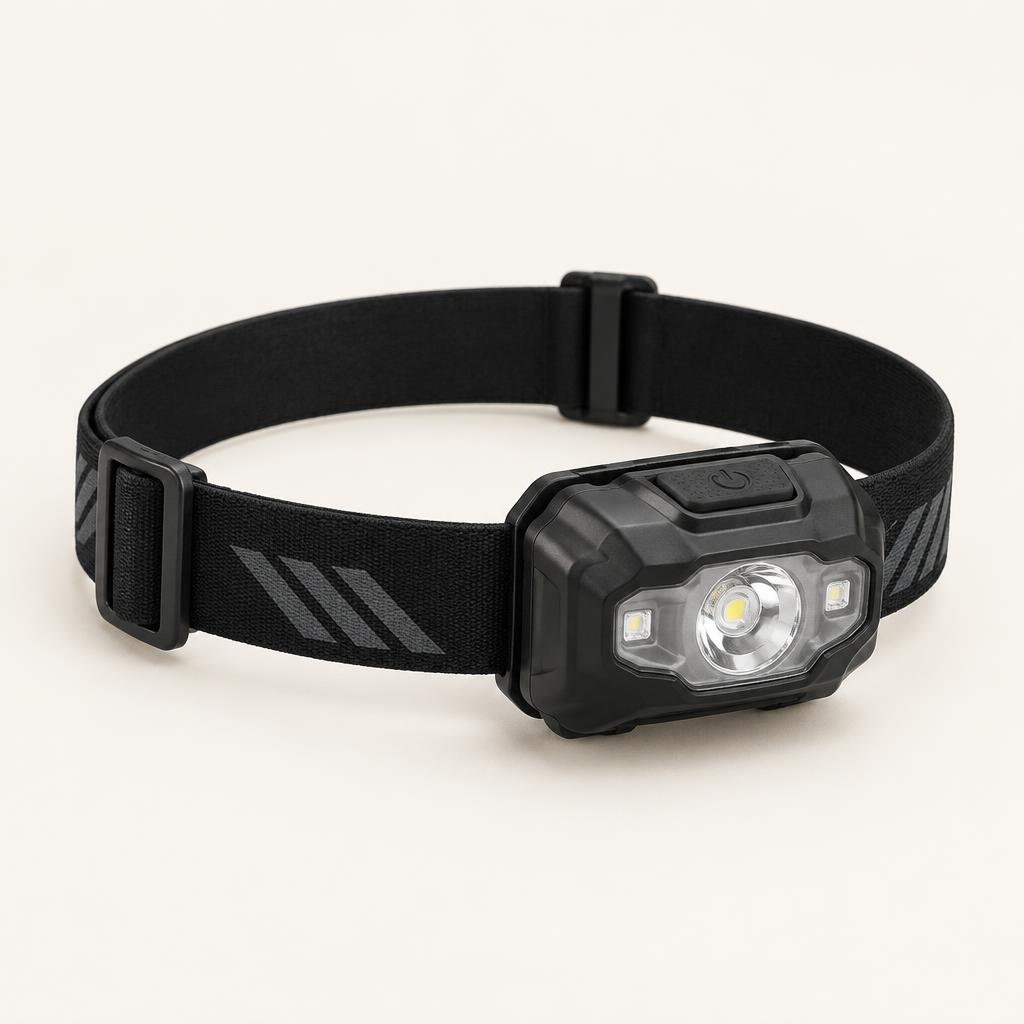
Still unsure? Compare headlamps side by side.